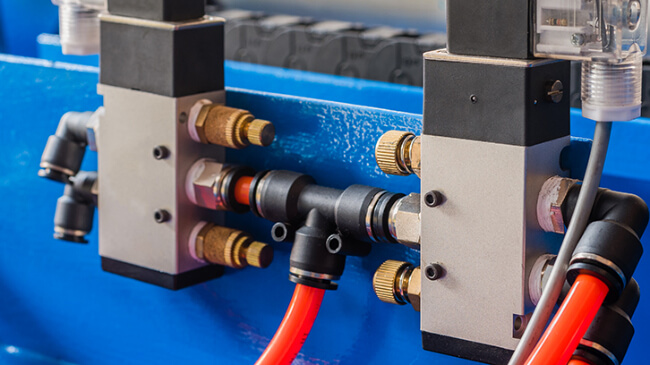
Among the various solenoid valve types on the market, direct-acting and pilot-operated designs are the two most fundamental. The difference between direct-acting and pilot-operated valves comes down to how they open: a direct-acting solenoid valve is moved directly by the coil, while a pilot-operated solenoid valve uses the coil to control a small pilot that lets system pressure do the heavy lifting. That distinction affects pressure requirements, flow capacity, power draw, and which applications each valve is built for.
What Is a Direct-Acting Solenoid Valve?
A direct-acting solenoid valve is one where the coil alone provides all the force needed to open and close the valve. The working principle here is the simplest of the two designs: when energized, the coil pulls the plunger directly off its seat, and a spring returns it once power is removed.
Because the coil has to generate enough force to lift the plunger against the full spring load and any line pressure by itself, direct-acting valves are typically limited to smaller orifice sizes — a larger orifice would need a coil too large and power-hungry to be practical. In exchange, a direct-acting solenoid valve doesn’t depend on line pressure to operate. It will open and close reliably at very low pressure, at zero pressure, or in a vacuum, which is why it’s the default choice for lab equipment, dosing systems, and gravity-fed lines.
What Is a Pilot-Operated Solenoid Valve?
A pilot-operated solenoid valve is one where the coil only actuates a small internal pilot, and system pressure itself moves the main valve element. Instead of lifting the whole valve directly, the coil opens a small pilot orifice; this bleeds pressure off one side of the main sealing element, and the pressure difference that results lifts it off its seat.
Most pilot-operated valves use a flexible diaphragm as that main sealing element, which is why they’re often called diaphragm-operated solenoid valves; some higher-pressure or high-cycle designs use a piston instead, though the pilot-actuation principle stays the same either way. Because the coil only has to move a tiny pilot rather than the entire flow path, pilot-operated valves can control much larger orifices and higher flow rates with a smaller, lower-power coil than an equivalent direct-acting valve. The trade-off is that they need a minimum pressure differential across the valve to function, which is covered in more detail below.

What Are the Key Differences Between Direct-Acting and Pilot-Operated Solenoid Valves?
The table below summarizes how the two designs compare across the factors that typically drive a selection decision.
| Feature | Direct-Acting | Pilot-Operated |
|---|---|---|
| Actuation | Coil moves the sealing element directly | Coil opens a small pilot; line pressure moves the main element |
| Minimum pressure differential | None required | Required to fully open |
| Typical orifice/flow size | Small to medium | Medium to large |
| Coil size and power draw | Larger, for a given orifice size | Smaller, for a given orifice size |
| Zero-pressure or vacuum service | Yes | Generally no |
| Common construction | Plunger and seat | Diaphragm or piston with pilot orifice |
What Is Minimum Pressure Differential in a Solenoid Valve?
Minimum pressure differential is the smallest pressure difference between a valve’s inlet and outlet needed for a pilot-operated design to fully open. Manufacturers often refer to this rating as the Minimum Operating Pressure Differential, or MOPD, and it exists because the diaphragm or piston needs enough pressure pushing on it to overcome spring tension and lift off the main seat. The exact figure varies by valve design and size, but it’s often just a few psi.
If the pressure differential across the valve falls below this threshold, the diaphragm won’t lift fully, and the valve may fail to open, or open only partway, even though the coil is energized correctly. This is also why direct-acting valves — which don’t rely on line pressure at all — are the better fit for gravity-fed, low-pressure, or vacuum applications where a pilot-operated design simply wouldn’t actuate.
How Do You Choose Between a Direct-Acting and Pilot-Operated Solenoid Valve?
The right choice usually comes down to line pressure, flow requirements, and valve size:
- Choose direct-acting when line pressure isn’t guaranteed, the application involves vacuum or zero-pressure conditions, flow needs are low, or a compact, fast-responding valve is preferred.
- Choose pilot-operated when a stable minimum line pressure is available and the application calls for a larger orifice or higher flow than a direct-acting valve of similar size and power could deliver economically.
Availability is worth checking too: both types are most commonly offered as normally closed solenoid valves, while normally open configurations are more limited, particularly among pilot-operated designs.
Where Are These Valve Types Typically Used?
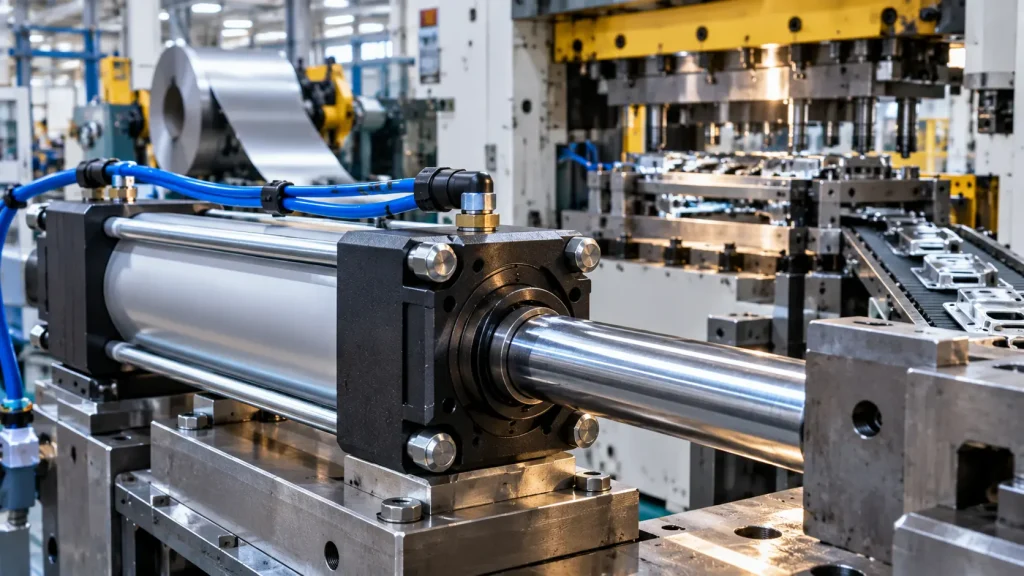
Direct-acting valves are common in laboratory instruments, analytical equipment, and low-flow dosing systems, along with any process where pressure can’t be guaranteed. Pilot-operated valves are the standard choice for general industrial fluid control valves running on compressed air or water mains — including systems that also rely on pneumatic actuators and cylinders downstream of the valve. Product lines such as Humphrey Air Piloted Valves are built specifically around this pilot-operated principle for higher-capacity circuits, while standard Humphrey Solenoid Valves and AirTAC Solenoid Valves cover many direct-acting applications.
Frequently Asked Questions
A direct-acting valve is opened and closed directly by the coil and works at any pressure, including zero. A pilot-operated valve uses the coil to control a small pilot that lets line pressure open a larger main valve, but it needs a minimum pressure differential to work.
It’s the smallest pressure difference between the inlet and outlet needed for a pilot-operated valve’s diaphragm or piston to lift and fully open. Below that threshold, the valve may not open even though the coil is energized correctly.
Yes. Because the coil moves the sealing element directly, without help from line pressure, direct-acting valves can operate at zero pressure differential and in vacuum service, unlike most pilot-operated designs.
It’s a common type of pilot-operated valve that uses a flexible diaphragm, rather than a piston, as the main sealing element. The diaphragm lifts once the pilot mechanism creates enough pressure differential across it.
Pilot-operated valves are generally the better fit for higher-flow industrial fluid control valves, since they can control much larger orifices with a smaller, lower-power coil than a direct-acting valve of the same size would need.
Conclusion
Direct-acting and pilot-operated solenoid valves solve the same basic problem — automated flow control — in two different ways, and the right one depends on the pressure and flow conditions of your system rather than personal preference. Direct-acting valves offer simplicity and zero-pressure operation; pilot-operated valves offer higher flow capacity at lower power draw, provided line pressure is available.
Browse our full range of pneumatic valves to compare direct-acting and pilot-operated options, or get in touch to confirm the right fit for your application.