A cryogenic valve is a valve specifically engineered to control the flow of liquefied gases at extremely low temperatures — typically down to around -196°C (-320°F) — without freezing shut, leaking, or failing as its materials contract. The defining feature that makes this possible is an extended bonnet, a lengthened section between the valve body and the stem packing that keeps the seals warm enough to function while the valve body itself sits at cryogenic temperature.
What Is a Cryogenic Valve?
A cryogenic valve is built to handle media that stays liquid only at extremely low temperatures — liquefied natural gas (LNG), liquid nitrogen, liquid oxygen, liquid argon, and liquid hydrogen among them. Standard industrial valves aren’t built for this: their seals, packing, and body materials aren’t rated for the thermal contraction and material embrittlement that extreme cold causes.
The core engineering challenge is straightforward to state but hard to solve: keep the valve sealing reliably while one end of it sits far colder than anything a standard valve was designed to tolerate. Cryogenic valves address this through specialized materials, an extended bonnet design, and sealing systems built specifically for repeated thermal cycling.
How Does a Cryogenic Valve Work?
A cryogenic valve works the same basic way any valve does — a ball, globe, or similar closure element opens and closes to control flow — but with construction specifically adapted to prevent the cold from reaching the parts that need to stay warm. A cryogenic ball valve, one of the most common configurations, uses a rotating ball with a bore through it; the ball and the valve body both operate at cryogenic temperature, in direct contact with the liquefied gas.
The critical difference is what happens above that point. Rather than mounting the stem packing and actuator directly on the cold valve body, a cryogenic valve pushes them further away, using the extended bonnet described below. This single design choice is what separates a cryogenic valve from a standard valve exposed to the same media.
What Is an Extended Bonnet Valve?
An extended bonnet valve — also called a cryogenic valve extended stem design — uses a lengthened neck between the valve body and the stem packing to physically separate the cold end of the valve from the warm end. Without it, the packing around the stem would freeze, harden, and eventually leak or seize as it’s exposed to the same extreme cold as the valve body.
The extension gives heat from the surrounding environment enough distance to warm the stem gradually as it travels upward, so the packing stays above freezing even though the ball or disc a few inches below is sitting in liquid at -196°C. This same extended bonnet length is also what makes a cold box valve installation possible: the valve passes through the wall of the cold box — the insulated enclosure housing cryogenic piping — with the actuator or handwheel left accessible on the outside at normal temperature.
What Temperature Range Do Cryogenic Valves Handle?
Cryogenic valve temperature range typically extends down to around -196°C (-320°F), the boiling point of liquid nitrogen, with some applications going colder still for liquid hydrogen or helium service. Cryogenics as a field is generally defined as temperatures below 120 K (-153°C), so valves rated for true cryogenic service sit well below that threshold.
At these temperatures, material behavior changes significantly — some metals that perform well at room temperature become brittle and prone to sudden failure when cold, which is why material properties at cryogenic temperature are tested and documented separately from standard ratings. Cryogenic valve bodies are typically built from austenitic stainless steel or similar alloys chosen specifically because they stay ductile rather than brittle at these temperatures.
What Media Do Cryogenic Valves Handle?
Cryogenic valves are built to handle gases that have been liquefied through cooling rather than pressure alone — LNG, liquid oxygen, liquid nitrogen, liquid argon, and liquid hydrogen are the most common. LNG valve applications are especially demanding, since LNG liquefies at around -162°C (-260°F) and is handled in large volumes across production, storage, and transport, often moving between vessels, storage tanks, and pipelines multiple times before it reaches an end user.
Each medium carries its own compatibility considerations for seal and body materials — hydrogen, for instance, requires careful material selection to avoid embrittlement issues specific to that gas — but the underlying valve design challenge is the same regardless of which cryogenic fluid is flowing through it: keeping the packing warm while the body stays cold.
Cryogenic Valve vs. Standard Valve: Key Differences
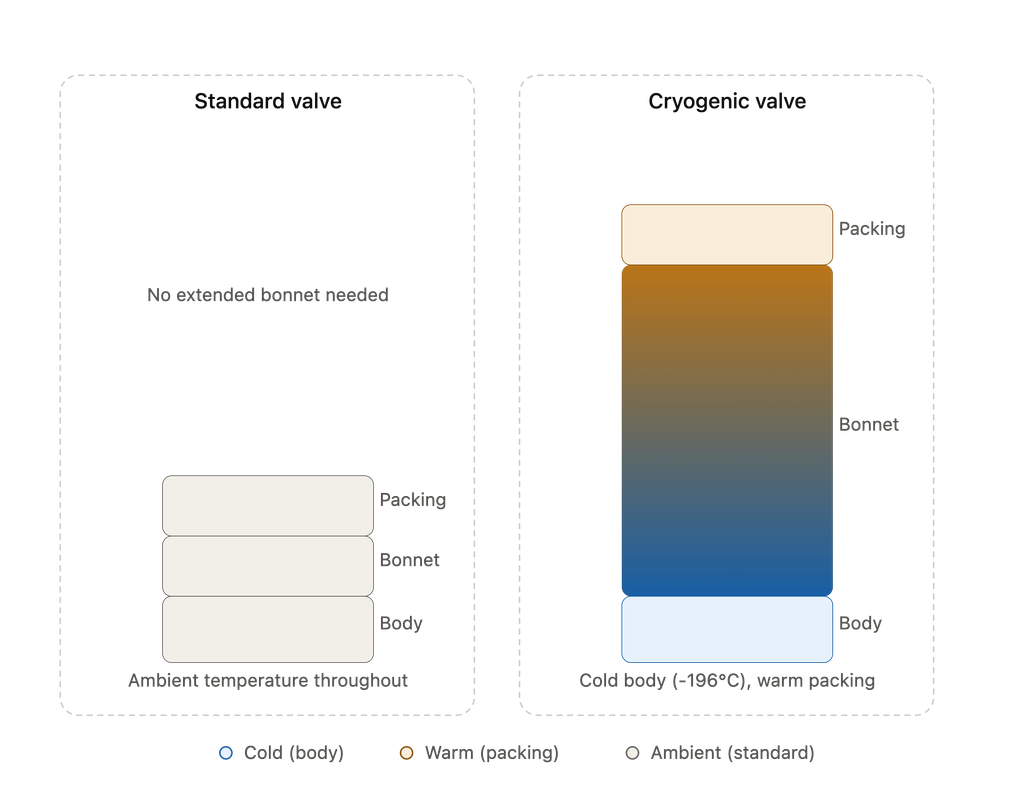
| Factor | Standard Valve | Cryogenic Valve |
|---|---|---|
| Bonnet | Standard length | Extended bonnet |
| Body material | General-purpose alloys | Austenitic stainless steel or similar cold-rated alloys |
| Typical temperature range | Ambient service | Down to around -196°C (-320°F) |
| Packing location | Close to valve body | Positioned away from the cold zone via the extension |
| Typical media | Water, air, general process fluids | LNG, liquid nitrogen, liquid oxygen, liquid hydrogen |
Where Are Cryogenic Valves Used?
Cryogenic valves are used anywhere liquefied gases are produced, stored, or transported — LNG facilities, industrial gas plants, and cold box installations among them. Because so many of these applications sit within the broader energy and natural resources sector, cryogenic valve reliability is often directly tied to plant uptime and safety.
Habonim builds cryogenic valves around a patented stem sealing system, HermetiX, designed to maintain a reliable seal through repeated thermal cycling. The same underlying valve platforms extend into related process applications, including hydrogen service and general process control valves, all covered under Pneumation’s process automation lineup.
Frequently Asked Questions
A valve is considered cryogenic when it’s specifically engineered to handle liquefied gases at extremely low temperatures, typically through an extended bonnet, cold-rated body materials, and seals built for repeated thermal cycling.
It separates the stem packing from the cold valve body, keeping the packing warm enough to seal properly and preventing the actuator or handwheel from icing up or freezing in place.
Most cryogenic valves are rated down to around -196°C (-320°F), the boiling point of liquid nitrogen, with some designs rated for even colder service such as liquid hydrogen or helium.
Generally not. Standard valve materials can become brittle at extreme cold, and without an extended bonnet, the stem packing would freeze, leading to leaks or a seized valve.
Liquefied natural gas (LNG), liquid nitrogen, liquid oxygen, liquid argon, and liquid hydrogen are among the most common gases handled through cryogenic valves.
Conclusion
A cryogenic valve solves one specific engineering problem: keeping a valve sealed and operable when one end of it sits at temperatures far below anything a standard valve was built for. Choosing the right valve for extreme low temperatures comes down to the extended bonnet, cold-rated materials, and purpose-built sealing systems that all exist to answer that single challenge.
If you’re specifying a valve for LNG, industrial gas, or another cryogenic application, get in touch and we’ll help you match the configuration to your temperature and media requirements.