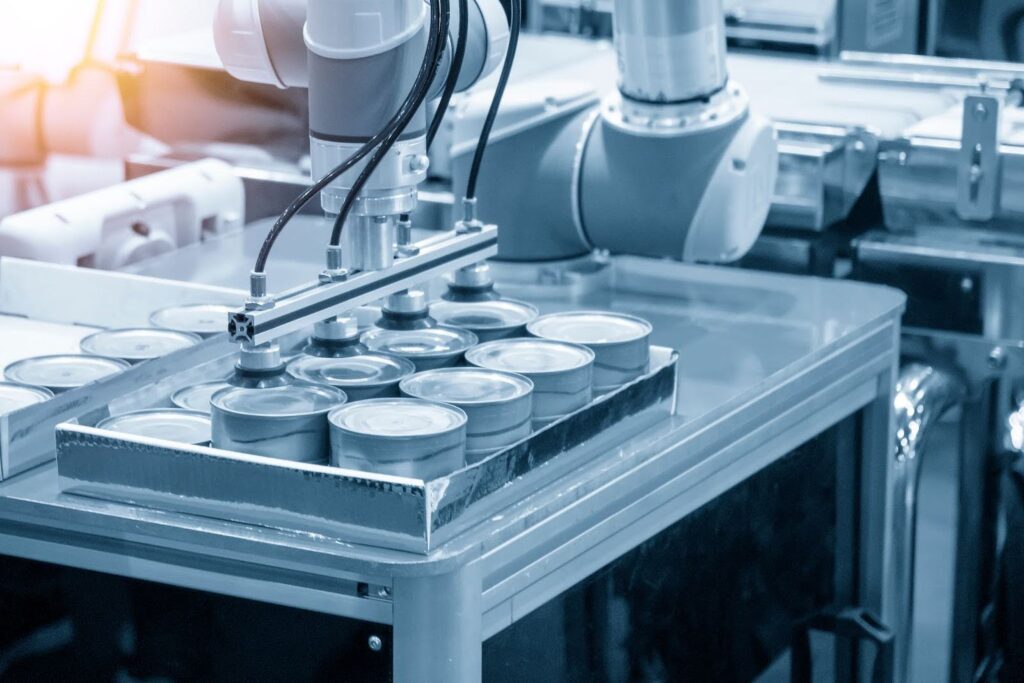
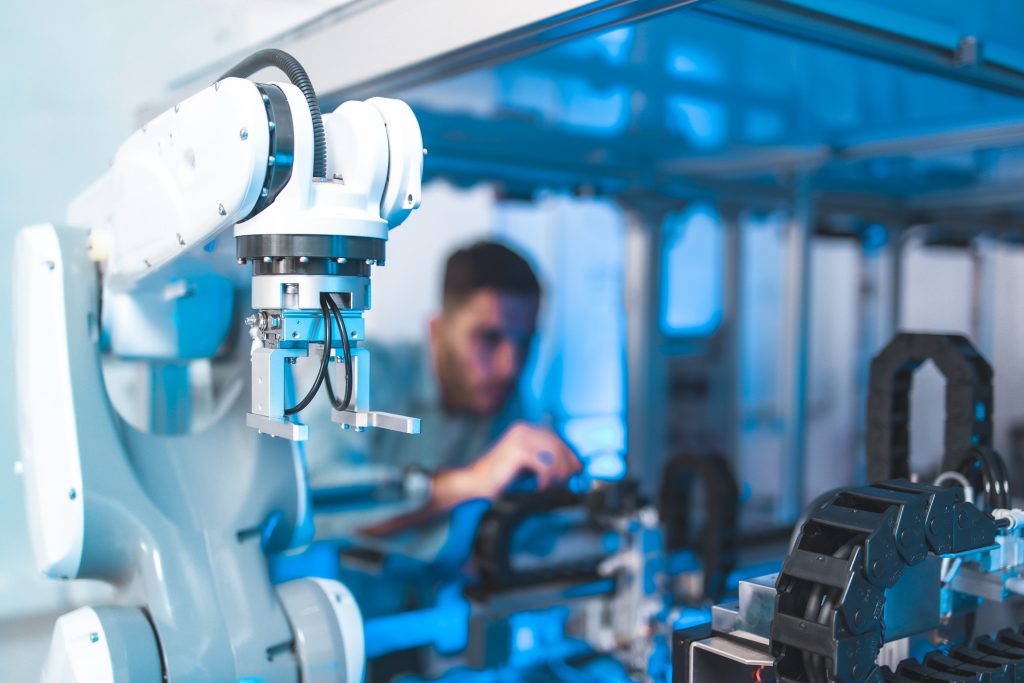
A machine vision camera is the right tool when a task requires interpreting an image — measuring a dimension, reading a code, or judging quality. A traditional sensor is the better fit when the task is a simple yes or no, such as whether a part is present or within range. Machine vision vs. traditional sensors isn’t really a question of which is “better” — it’s a question of which one your task actually needs.
What’s the Difference Between a Photoelectric Sensor and a Camera?
A photoelectric sensor reacts to one thing: a beam of light being broken or reflected back. A camera captures an entire image and analyzes it for shape, size, text, or defects. That’s the core of the photoelectric sensor vs. camera question — one detects a single event, the other interprets a scene.
Traditional sensors also include inductive and capacitive proximity sensors, which sense metal or other materials without contact, and ultrasonic sensors, which measure distance using sound waves. All of them share the same basic design: one input, one output, no image. Wikipedia’s overview of proximity sensors describes this well, noting that these devices detect nearby objects through a field or beam rather than by capturing visual detail.
That simplicity is also their strength. A photoelectric sensor is inexpensive, fast, and needs no lighting or configuration — it just can’t tell you anything about what it detected beyond the fact that something was there.

What Can a Machine Vision Camera Do That a Sensor Cannot?
A machine vision camera can measure, read, and judge quality — tasks that depend on interpreting an image rather than reacting to a single signal. Once a system needs to check a dimension, read a barcode, or verify that a part was assembled correctly, object detection in industrial automation stops being a simple presence check and becomes a full image-analysis problem.
This is what makes a camera the right tool for vision-guided quality inspection: catching a scratch, a missing component, or the wrong-colored part, none of which change a light beam, a magnetic field, or a distance reading. It’s also why a camera can tell two similar-looking parts apart, where a sensor would treat them identically. For more on how a full vision system processes an image end to end, see our guide on machine vision basics.
What Are Traditional Sensors Best Used For?
Traditional sensors are the better choice for fast, simple presence and position checks — confirming a part has arrived, a gate is clear, or a bin is full. A photoelectric or proximity sensor can make thousands of on/off decisions per second with no image processing involved.
For counting parts, triggering a downstream action, or confirming a container reached the right fill level, a traditional sensor is usually more robust and far less expensive than a camera-based system. These tasks only need to know that something is, or isn’t, in a specific place — not what it looks like.
Industrial Machine Vision Systems vs. Traditional Sensors: Key Differences
| Factor | Traditional Sensors | Machine Vision |
|---|---|---|
| What it detects | Presence, position, or distance | Shape, dimensions, text, defects |
| Data output | On/off signal or single value | Full image with multiple data points |
| Setup | Minimal — mount and wire | Camera, lighting, and configuration |
| Speed per decision | Very fast | Fast, but slower than a single sensor |
| Relative cost | Low | Higher |
| Best fit | High-speed, single-variable checks | Quality, measurement, and identification |
Industrial machine vision systems earn their higher cost and setup time only when the task genuinely needs image interpretation. For a straightforward presence check, that added complexity doesn’t buy you anything.
When Should You Choose a Vision Inspection Camera?
A vision inspection camera is worth the investment when your task involves any of the following:
- Measuring a dimension or tolerance, not just confirming presence
- Reading or verifying a barcode, date code, or printed label
- Detecting surface defects, color variation, or missing components
- Telling apart visually similar parts or catching mixed-up SKUs
- Confirming several features are correctly assembled at once
If none of these apply, a traditional sensor will typically do the job for less money and less setup time. As a quick industrial sensor selection guide: start by asking whether the task needs to measure or read something, or only needs to know whether it’s there.
Where Is Machine Vision for Automation Used Today?
Machine vision for automation now runs on everything from checking weld quality on an automotive line to reading fill levels on a beverage line and inspecting solder joints on a circuit board. It also shows up in packaging, where a camera confirms a label is correctly printed and positioned before a case ships, and in assembly, where it verifies that every fastener and connector is actually in place. A camera-based inspection system such as the Siemens Inspekto S70 is built to handle these jobs without requiring a dedicated vision engineer to set it up.
In practice, cameras and traditional sensors usually work side by side rather than one replacing the other: a photoelectric sensor detects that a part has arrived, and that signal is what triggers the camera to capture and analyze it. The sensor handles the timing; the camera handles the judgment call.
Frequently Asked Questions
A photoelectric sensor reacts to a single event, such as a broken light beam, and outputs a basic on/off signal. A machine vision camera captures a full image and can measure, read, and judge quality rather than just detect presence.
No. A traditional sensor only responds to the one physical property it’s built to sense, such as light or distance, and has no way to evaluate appearance. Defect detection and quality inspection require a camera-based system.
Usually not. Basic presence, position, or counting tasks are handled reliably and cheaply by traditional sensors. A camera is worth the added cost once you also need to measure, read, or inspect quality.
Tasks that involve interpreting an image — measuring dimensions, reading codes or labels, detecting surface defects, and confirming that multiple features on a part are correct.
Yes, and this is a common setup. A photoelectric or proximity sensor detects that a part is in position, which then triggers the camera to capture and inspect it, combining the sensor’s speed with the camera’s ability to judge quality.
Conclusion
Traditional sensors and machine vision cameras answer two different questions: whether something is there, and what it actually looks like. The right choice depends on which question your process needs answered, not which technology is newer or more advanced.
If your line needs to measure, read, or inspect for defects, our machine vision solutions are worth a closer look — or get in touch to talk through what fits your application.